
FOR IMMEDIATE RELEASE
For More Information, Please Contact:
STEVE HAUGEN, Kings River Watermaster
Snow is in short supply around the Kings River watershed this spring with far below average snowpack when conditions should be at their peak. Despite decent precipitation in the early winter months, a record setting dry and hot March, with zero precipitation in the region, left the snowpack in ruins. Those were the findings of April 1 measurements taken by the Kings River Water Association (KRWA) and other California Cooperative Snow Survey partners in the mountains of eastern Fresno and Tulare counties.
Kings River snowpack water content is about 12.5 inches, 43% of average for April 1, when snow conditions typically peak. Snow depths averaged 29.1 inches this year compared with a historical average of 70.1 inches. Last year, surveyors found about 9.5 inches more water content during the April 1 snow survey. This year’s peak snowpack came a month early and has been melting away, increasing river flows to unusual levels.
KRWA Watermaster, Steve Haugen, said snowpack that typically melts in the spring is the primary source of water for the Kings River, which provides surface water to irrigation districts and water users in portions of Fresno, Tulare, and Kings counties. “In a month that had no precipitation, March has seen flows more than double compared to years with similar water supplies. Typically, we see peak snowmelt runoff occur in May or June, with most of the snowmelt occurring April through July. This year, we likely witnessed peak snowmelt runoff in March,” said Haugen. “The early runoff has impacts on water supply partitioning to our member units and influences when water deliveries are made.”
Haugen added, “Although most Valley residents may not remember anything but fog this winter, warm and sunny conditions prevailed in the Sierra Nevada above the fog layer. Coupled with dry conditions and record high temperatures, the snowpack is melting early. Without additional storms, the Kings Basin snowpack could yield very little river flow this spring and summer.” While the snowpack is below average, Pine Flat reservoir storage is currently 143 percent of average for this time of year.
Of the 18 snow survey courses measured so far, the deepest snow was at Blackcap Basin in the river’s North Fork at 10,300 ft elevation. There, the snow depth was 54.5 inches with a water content of 24.5 inches, 74% of average. The least snow — none — was at Fred Meadow in the North Fork of the Kings River near Wishon Reservoir. Four more snow courses remain to be sampled before the April 3rd deadline.
“Water supply in California increasingly depends on a small number of big storms,” said California Department of Water Resources (DWR) Director Karla Nemeth. “We face higher drought risk when they don’t arrive and greater urgency to modernize infrastructure to capture water when they do. The dramatic wet-dry swings this winter remind us again that ever-warmer average temperatures have reshaped the California water cycle. We must adapt.”
Dry conditions through March and record high temperatures prompted water managers to adjust normal monitoring operations. To get eyes and measurements in several watersheds to better understand snowmelt conditions to inform runoff forecasts, DWR and several of its partners in the California Cooperative Snow Surveys program conducted mid-March snow surveys at almost 100 of the 259 courses in watersheds throughout the state, which has never been done before. The results triggered forecasters to make large runoff forecast adjustments in areas that are supplied by snowmelt.
Additionally, DWR will be using the April 1 snow survey and information collected from Airborne Snow Observatory (ASO) flights to provide the Kings River water supply forecast. KRWA Assistant Watermaster, Matthew Meadows, said, “This detailed snowpack information collected by snow surveyors, coupled with remote weather stations and ASO, will give water managers the best accounting of snowpack conditions and expected summer water supplies. When conditions change, water managers will need these tools to make confident decisions.” Snow survey teams are already preparing for another trip to the high-country scheduled for the end of April.
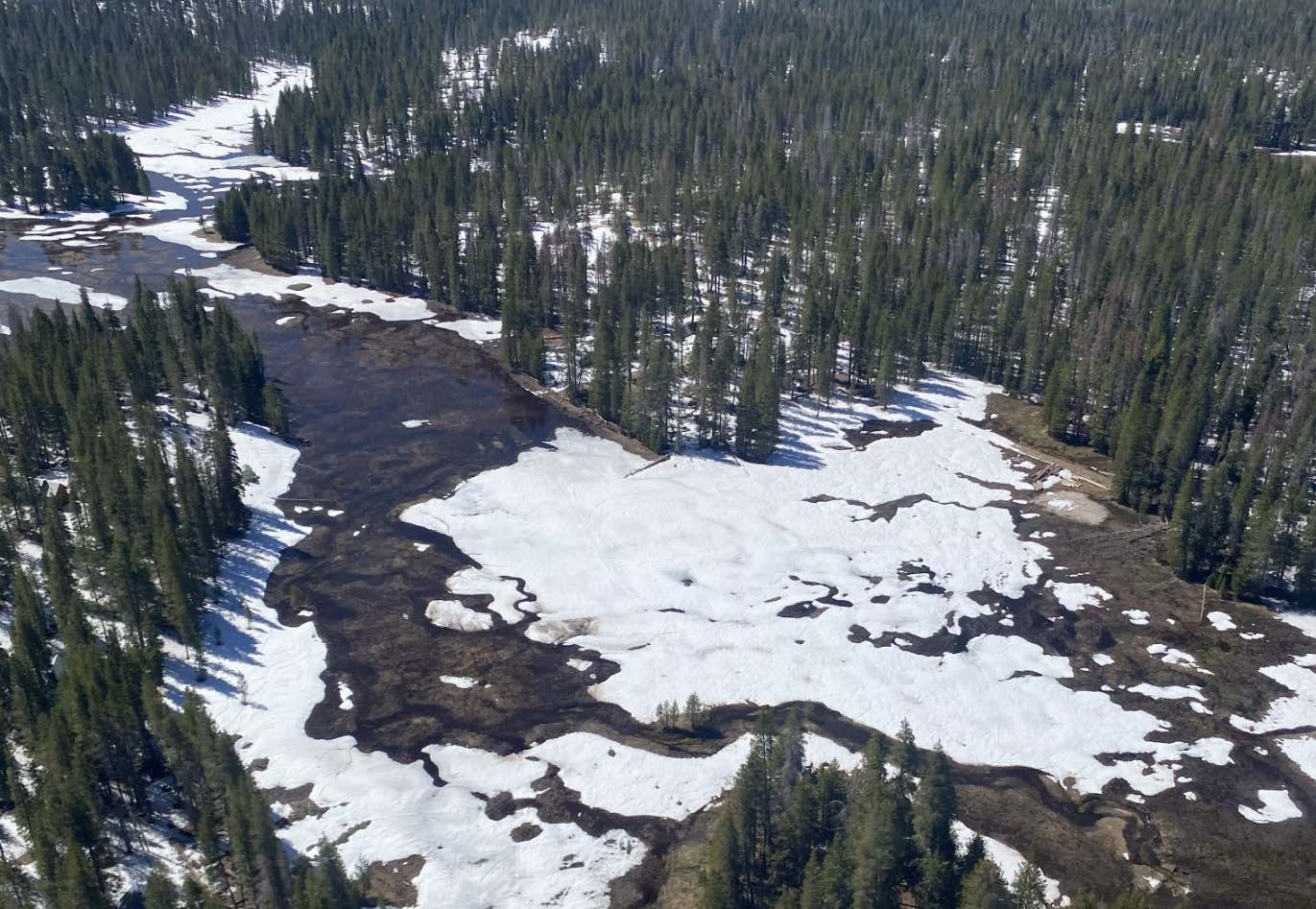
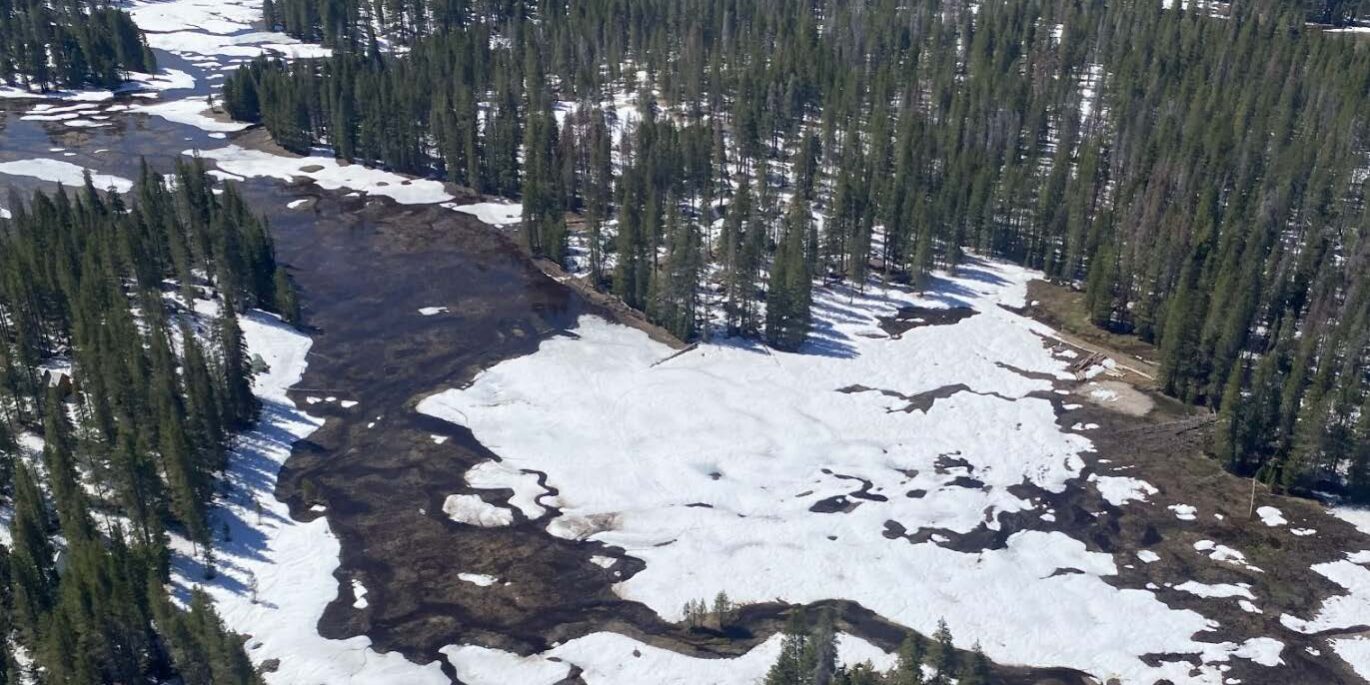
Kings River Water Association snow surveyors fly over mostly melted snow and saturated conditions at Big Meadows in the Kings River Basin, elevation 7,600 ft. (PHOTO BY JENNIFER GONZALEZ, KRWA